MAARG Technologies is an Indian technology company I founded to build AI and hardware systems for the infrastructure people rely on every day. Maarg means path in Sanskrit and Hindi — the way from one place to another — and the company builds the systems that keep a city’s paths moving. Traffic is where we start, because it is where the need is most visible.
The problem
Indian roads don’t follow a timetable. Buses, cars, autos, two-wheelers and pedestrians share the same junction, and demand changes by the minute. Most signals still run on fixed plans set months ago. Emergency vehicles wait at the same reds as everyone else, incidents are found when someone calls them in, and commuters learn about a jam once they are already in it.
MAARG Intelligence
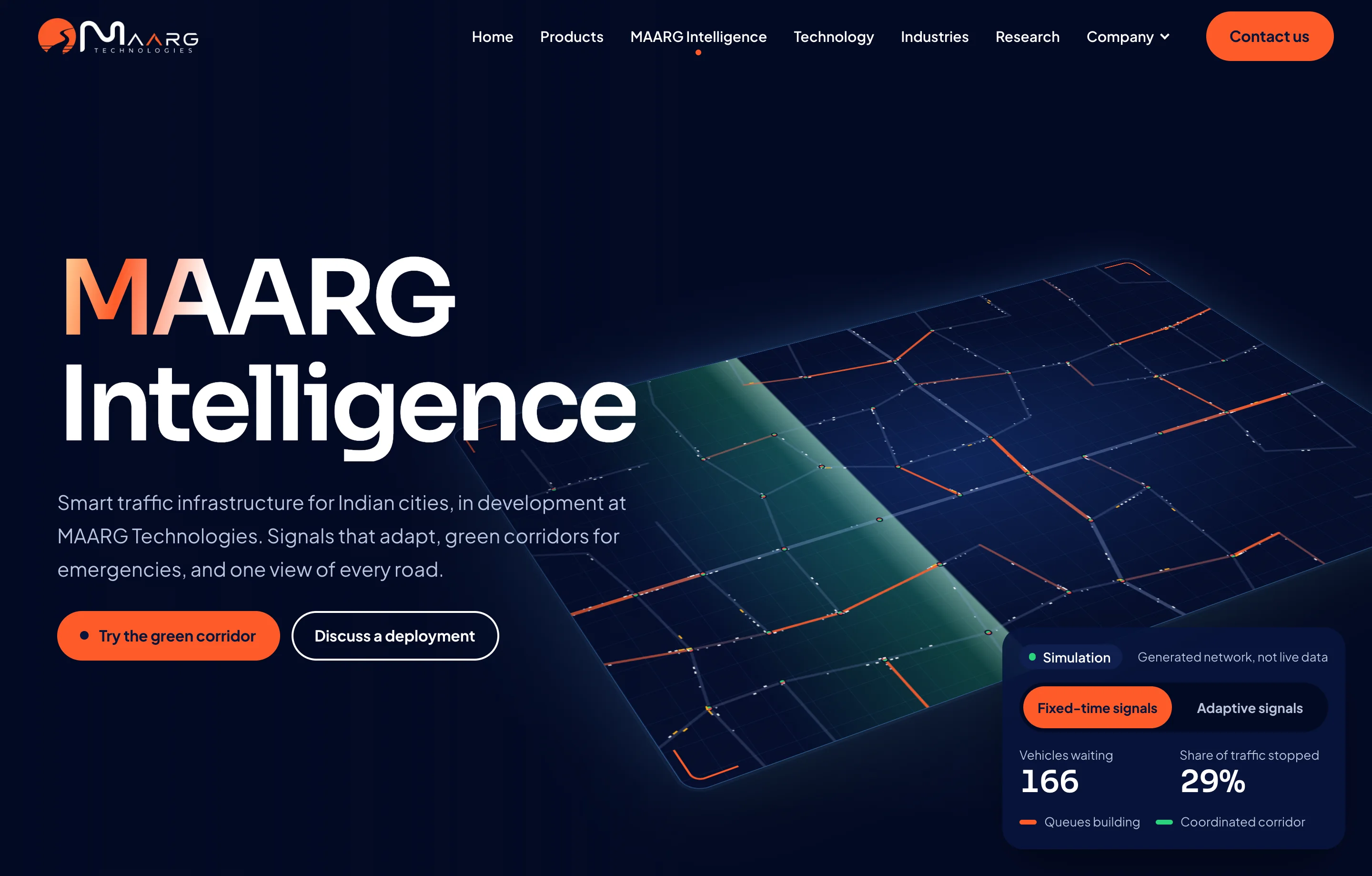
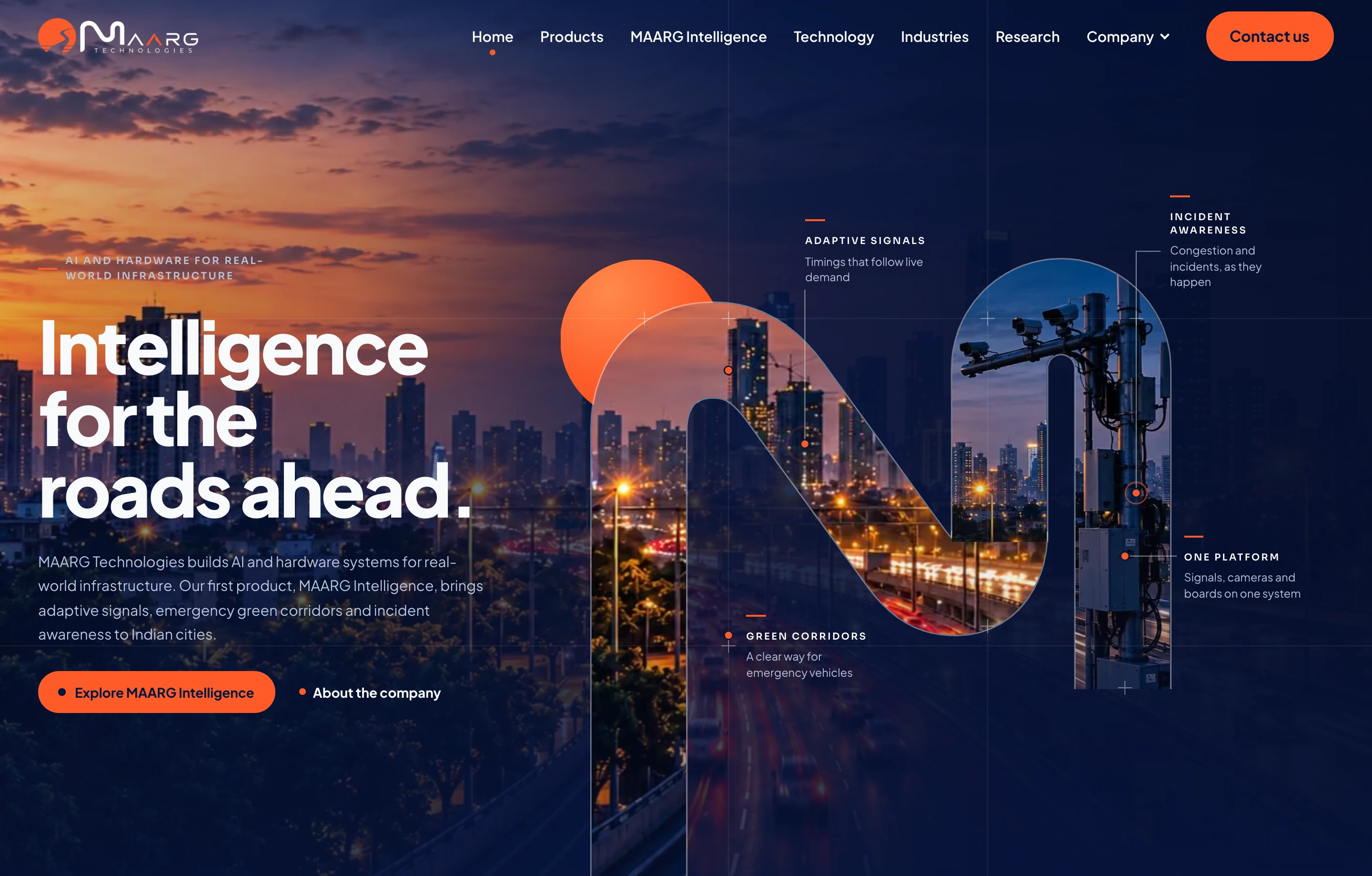
Our flagship product is one smart traffic platform for signals, cameras, sensors, message boards and operators, so a city can see its roads clearly and respond in time.
- Adaptive signals — timings that follow live demand, with corridors coordinated into one green wave.
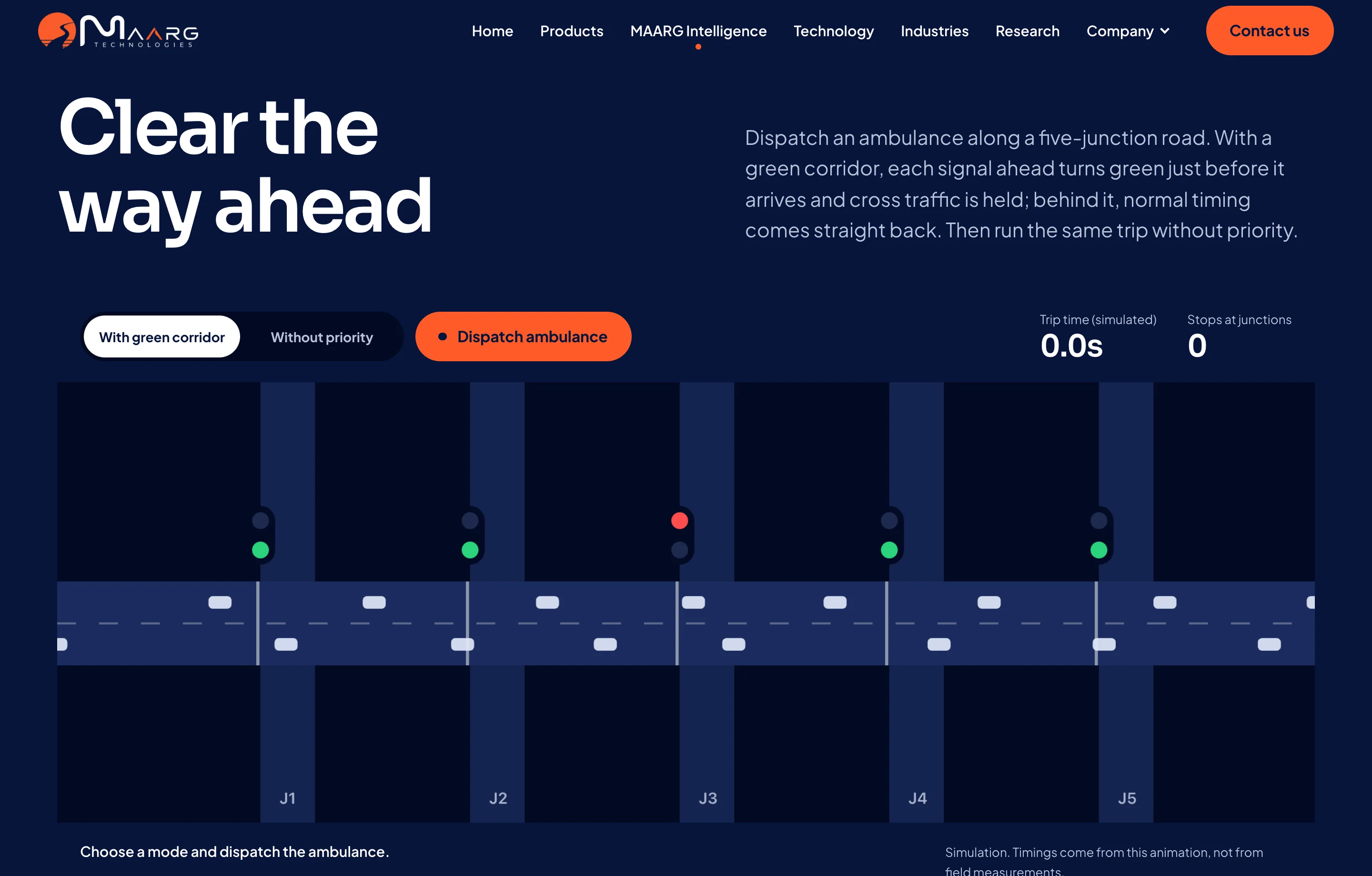
- Green corridors — junctions ahead of an ambulance turn green just before it arrives, and normal timing returns right behind it.
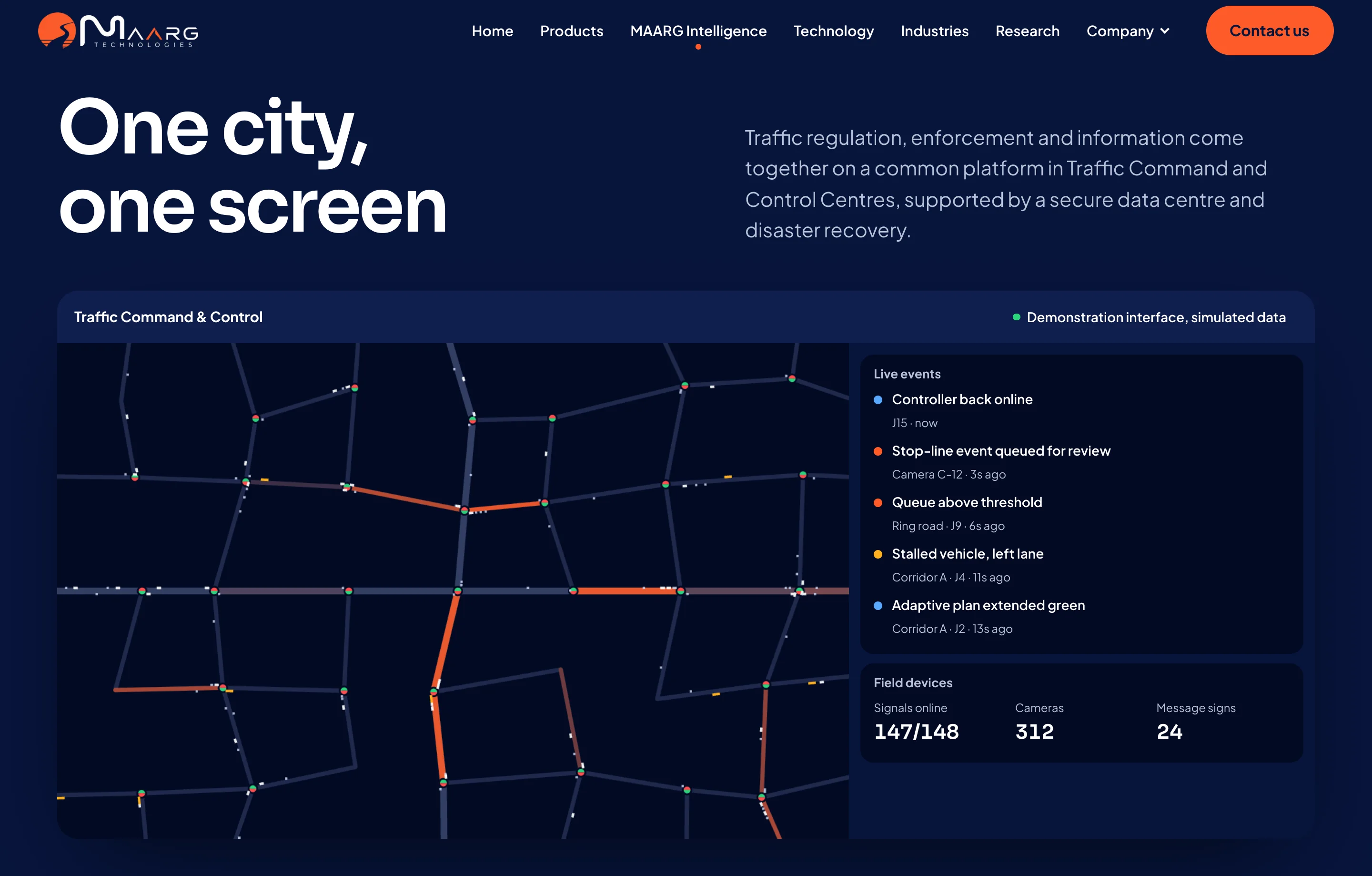
- Incident detection — congestion, slow traffic and road incidents surface on the operations screen in real time.
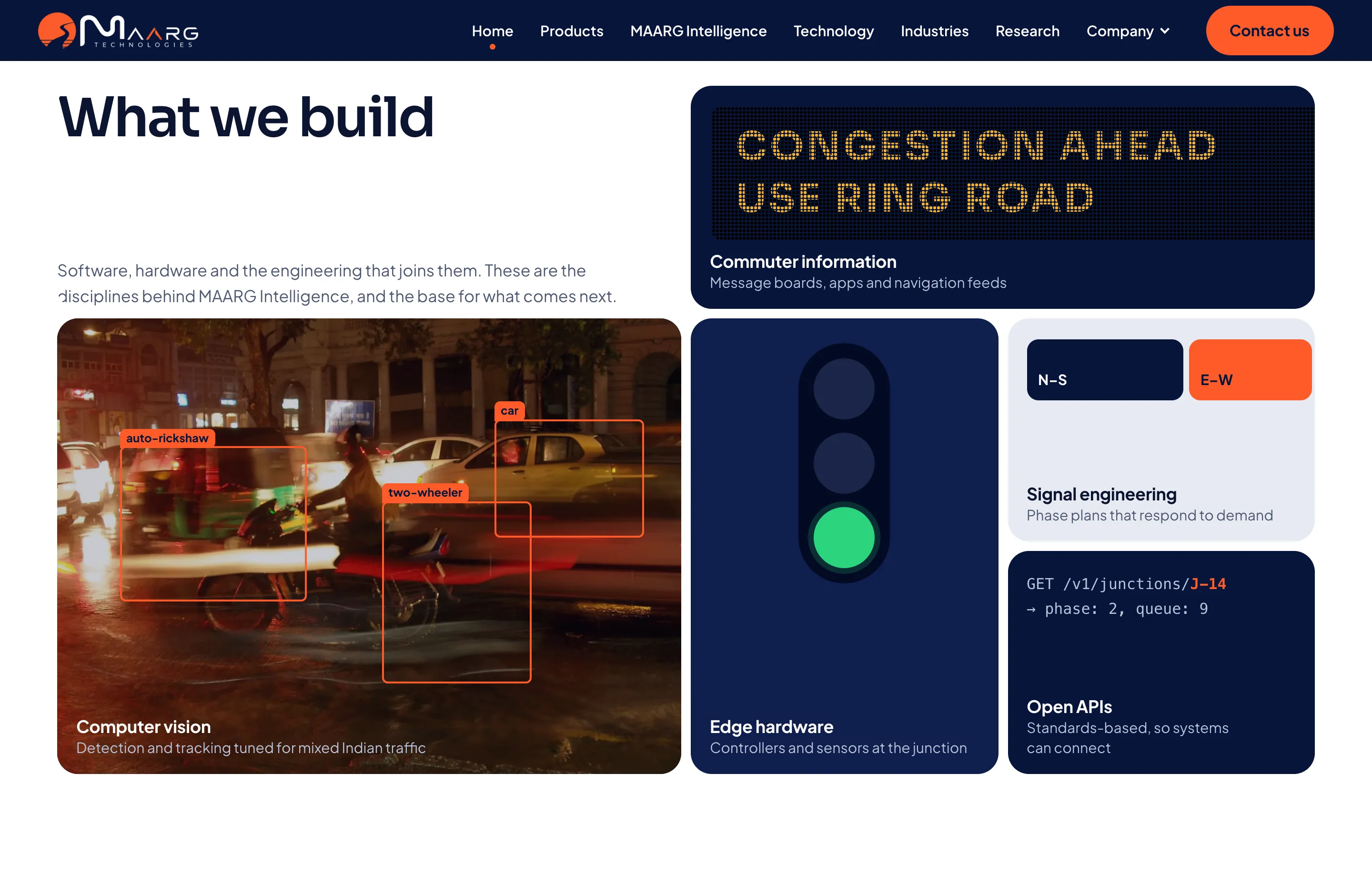
- Commuter information — message boards, apps and navigation providers, all updated from one place.
- Enforcement support — red-light, speeding, helmet and other violations flagged as evidence for an officer to review.
- Command and control — every junction on one platform in a Traffic Command and Control Centre, backed by a secure data centre with disaster recovery.
How it works
Every MAARG system follows the same road: sense, understand, decide, act, inform. Cameras, detectors and controllers report what is happening at each junction; computer vision turns raw feeds into vehicles, queues and incidents; control logic chooses timings and priorities within rules engineers set; signals change and operators get the incidents that need a person; and message signs, apps and navigation partners tell people what changed.
It is built in layers and open at the edges — open standards and documented APIs, so a city’s existing cameras, controllers and signs can connect today and new systems can join later without lock-in.
Engineering principles
- Made for Indian roads — mixed traffic, dense junctions, monsoon rain and dust are the design case, not the edge case.
- Edge and centre — time-critical decisions run at the roadside and keep working when the network drops.
- Private by design — collect only what the purpose needs and keep it only as long as required.
- People decide — the system recommends and flags; enforcement decisions stay with authorised officers.
The website
I designed and built maargtechnologies.in as a product in itself: interactive simulations of a city network, a green-corridor run and a control-room screen let visitors see how the system is designed to work — each clearly labelled as a simulation, never presented as field results.
Where it stands
MAARG Intelligence is in development, modelled and tested in simulation first. Next comes a first pilot corridor with a city or police partner, measured against how those roads perform today; later, city-scale rollouts and new AI and hardware products for other kinds of infrastructure. Results will be published only once they are measured and approved by the partner.
Technology with direction.