[01]Workshop
ResTech 2025: Unveiling Tools and Technology Driving Research, IPR and Patents
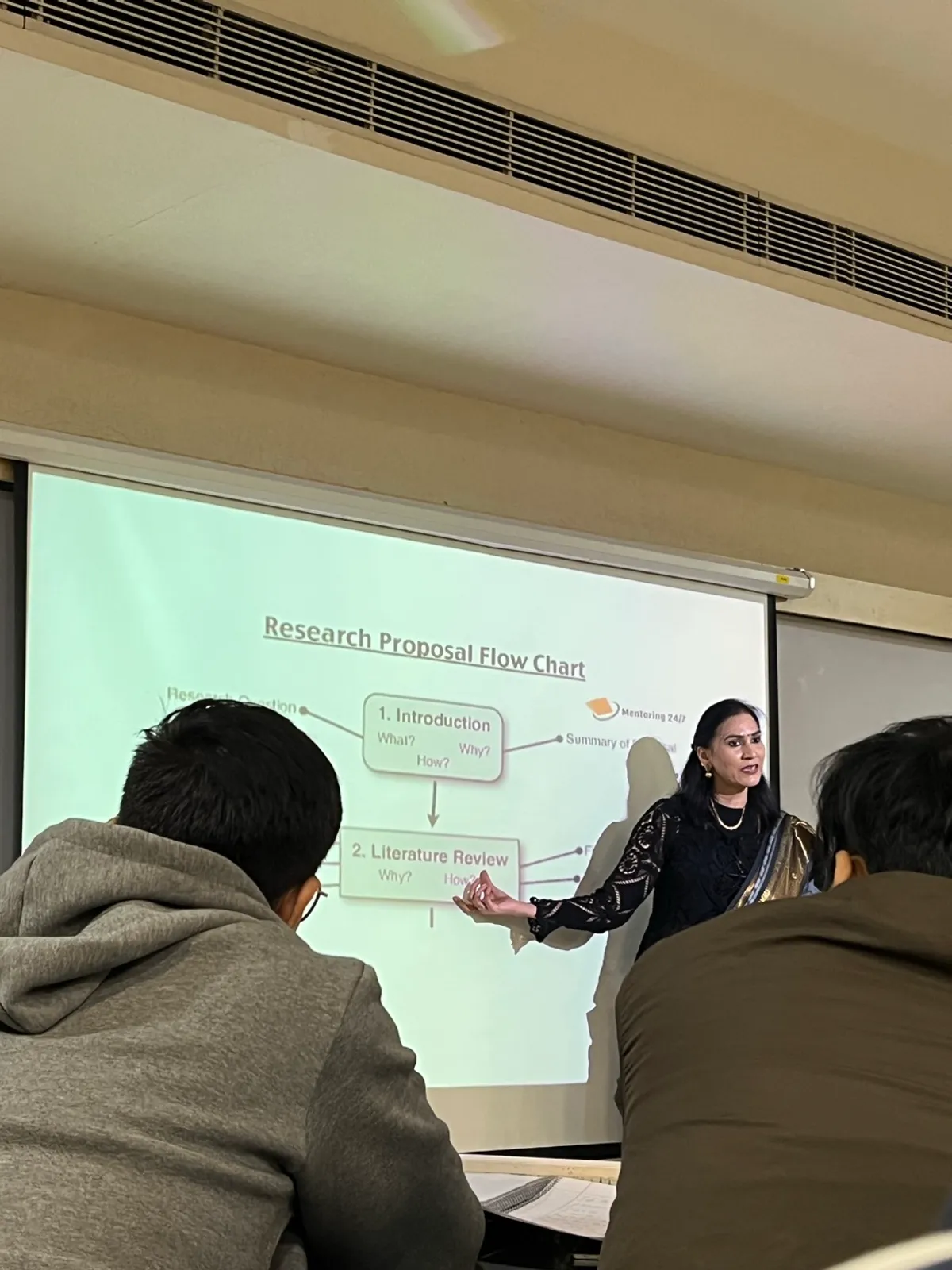
What actually makes something research, and not just search? ResTech 2025 took that apart with Dr. Reecha Sharma of Punjabi University, Patiala: where research starts, how to frame a problem, how a paper is built, and the tools that help, with a look at IPR and patents along the way. 🔍
- When
- 14 November 2025
- Where
- Chitkara University, Punjab
- Hosted by
- Soft Computing Research Society (SCRS) · Chitkara University
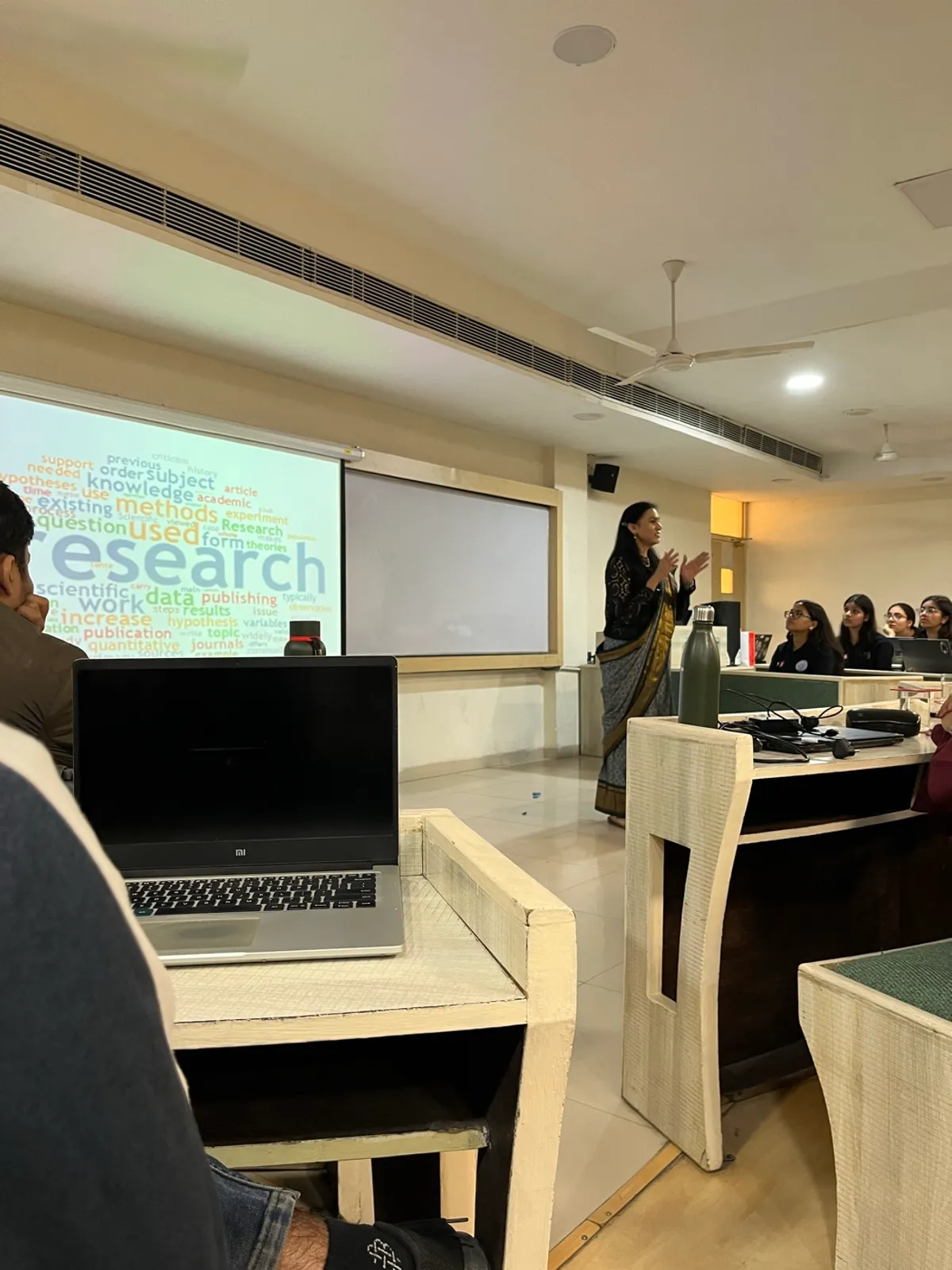
[01]The research cycle 🔁
Six steps from my notes, in order. Research begins with a problem, and that problem need not be earth shaking. Identifying it is often the hardest part.
Identify the problem
Work out what the problem means. Start from curiosity, research gaps, a controversy worth going deep on, or a paper worth replicating.
Develop questions, examine assumptions
Ask what, why, where, who, when and how. Accept the critical assumptions that are fixed, like the truth table of an AND gate.
Gather data
Collect what the question actually needs, and nothing it doesn't.
Analyse the data
Check its accuracy before trusting it.
Interpret the data
What do the results say about the question you started with?
Take action
Write it up, and make the abstract and the conclusion reach the same point.
[02]Research, not search 🧠
Five things from the session, as cards. Answer them in your head first, then flip.
0 / 5 answered · tap a card to flip it
[03]What I learned
What research truly means
A systematic inquiry to discover new knowledge, expand on what exists or solve a problem, by gathering and analysing information.
Six questions, one problem
What are the facts, and what do I want to achieve? Why did the problem arise? Where does it have an impact? Who, when, and how can people and technology be involved?
The traits of research
It starts with a question, states its goal clearly, follows a plan, breaks the problem into sub-problems, and is guided by a hypothesis.
The shape of a paper
Title, an introduction of no more than 800 to 1,000 words, review of related literature, conceptual framework and methodology. References with numeric citations for every borrowed paragraph.
Good research is honest
Define the scope and limitations, write in plain language, hold high ethical standards, and never take anyone else's work.
IPR and patents
Why innovative work needs protecting, and how intellectual property rights and patents do it.
[04]Credits
Directed by
Govind Jindal
Finding open research papers
Google Scholar
Citations, wherever the cursor is
Mendeley Desktop
Citations in a research paper
MS Word References
Writing in LaTeX
TeXMaker
Datasets
Kaggle
In association with
Soft Computing Research Society (SCRS) · Chitkara University
[05]Behind the scenes
[06]The certificate
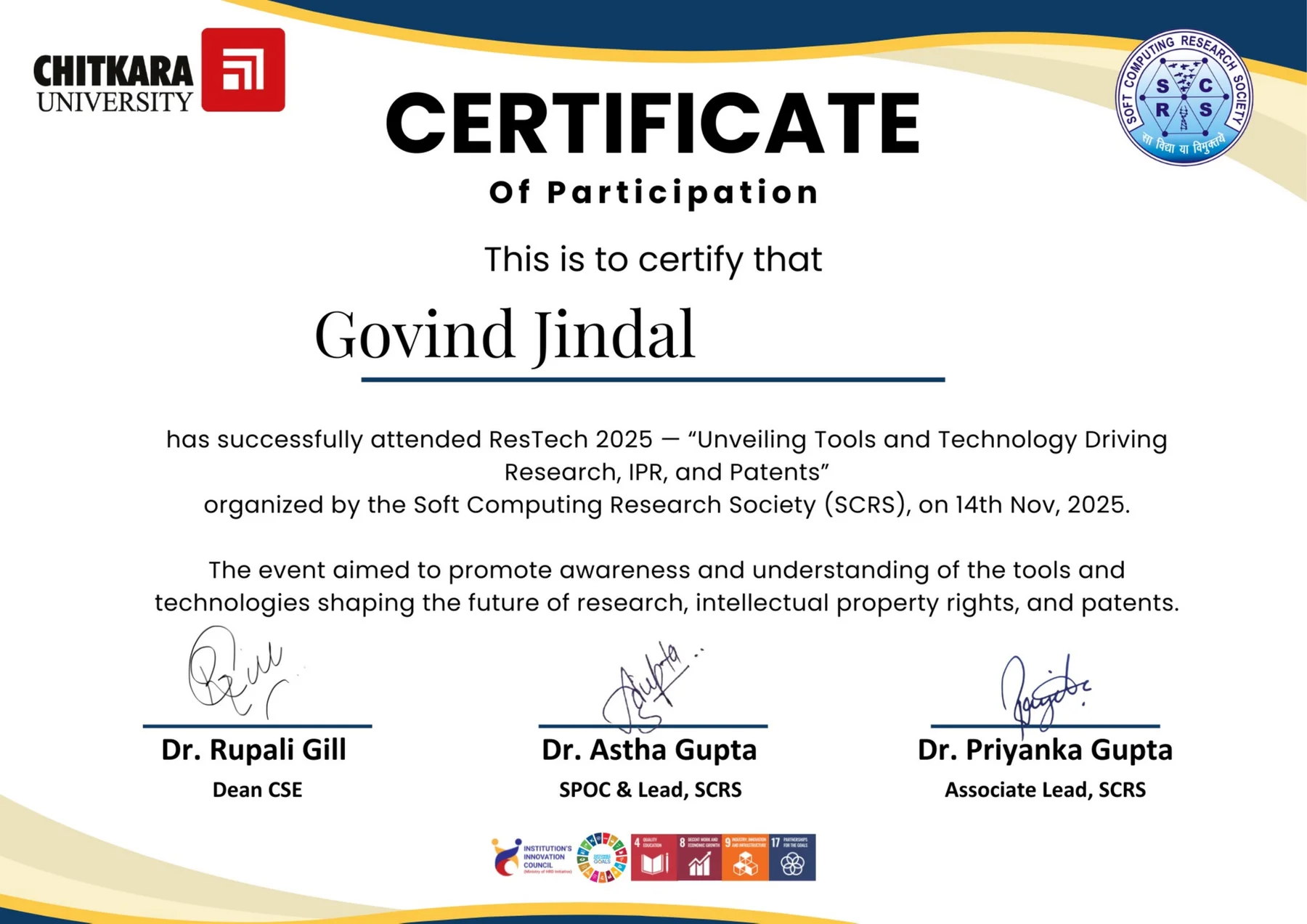 That's a wrap ✓
Attended ResTech 2025, "Unveiling Tools and Technology Driving Research, IPR, and Patents", organised by the Soft Computing Research Society (SCRS) on 14 November 2025. Signed by Dr. Rupali Gill, Dr. Astha Gupta and Dr. Priyanka Gupta. 📜
“The first time you look something up, it's search. Going back into it, again and again, with a sharper question each time: that's research. I'm looking forward to doing more of the second kind.”
Next workshop
Own Your Identity: Endless Domains Chandigarh Tour