[06]competition
★ Pitch, not codeWasteWise: Pitch the Future
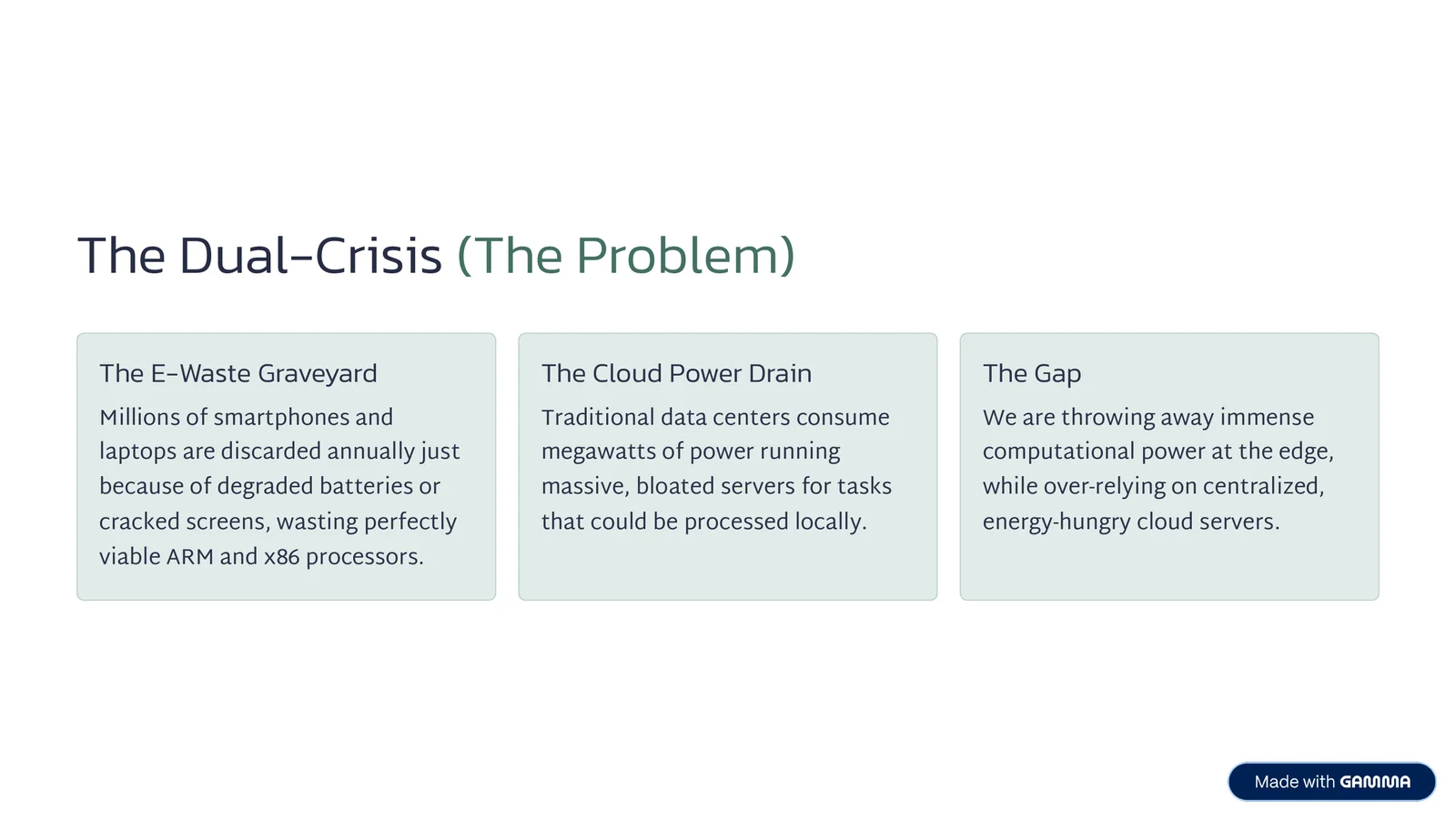
ParticipantA pitch competition, not a build: act as startup founders and convince the judges your idea gets us closer to zero waste. Bhavishya and I pitched EcoGrid, an upcycled edge-compute micro-cloud that turns discarded phones and laptops into a liquid-cooled cluster for Edge AI. Two crises, one idea: the e-waste graveyard and the power drain of cloud data centers. 🌍
- When
- March 2026
- Where
- Chitkara University, Punjab
- Hosted by
- Chitkara University Toastmasters Club · Chitkara University Language Centre
- Format
- in person · 4–5 minute pitch
- Track
- E-waste & data-center waste
[01]The squad
- Govind Jindal← that's me
- Bhavishya Grover
My role · Co-founder, on stage (both of us pitched)
[02]The rounds
Round 1
The brief
Teams of two, playing startup founders. Pick one waste category and pitch a technology-driven fix: the problem, the solution, the impact and a call to action. We chose two: e-waste and data-center waste.
Round 2
The pitch
Four to five minutes, in English, both of us speaking, and no reading from paper. The rule that stuck: focus on convincing the audience, not just explaining the technology.
[03]What we built
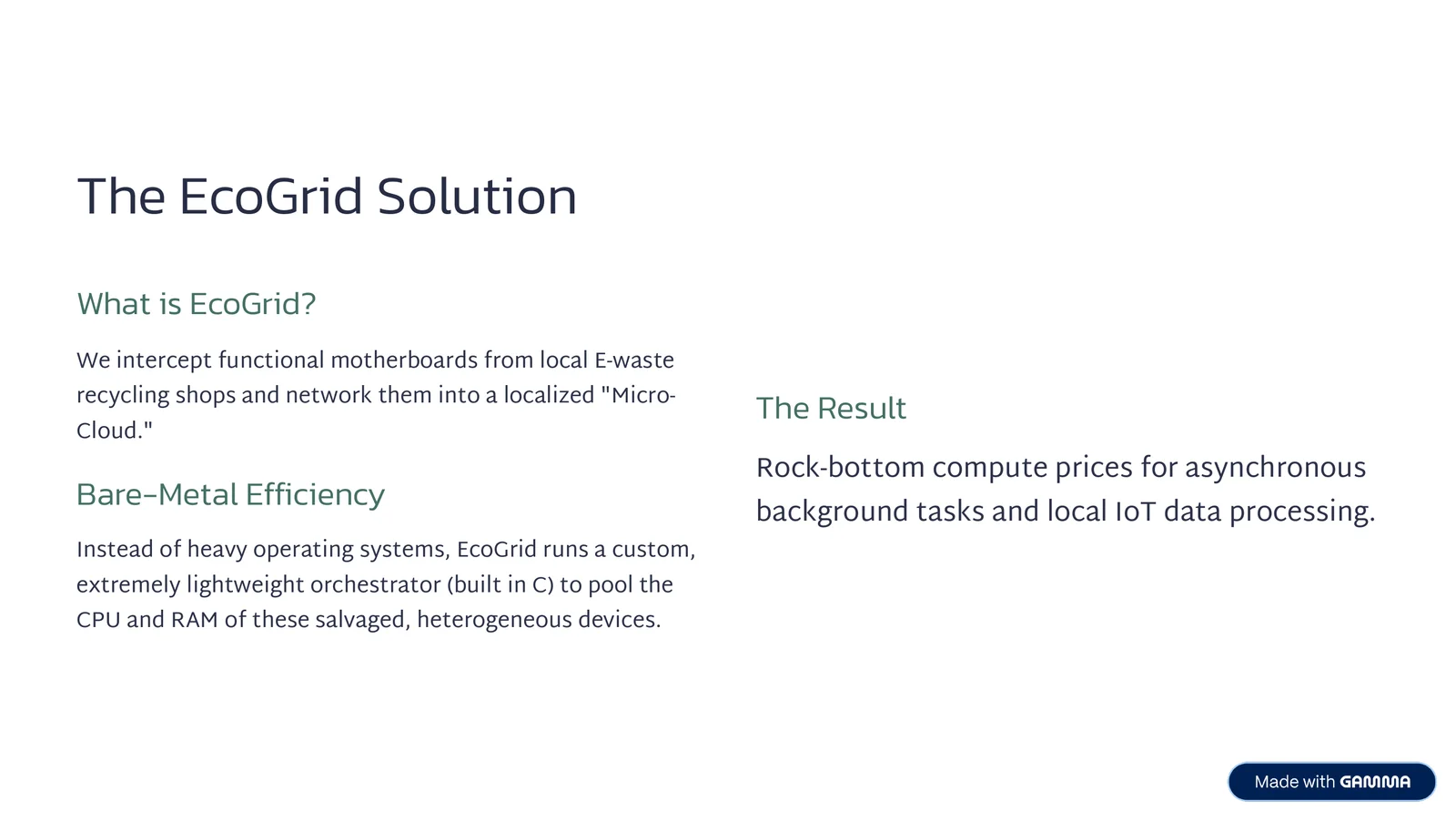
EcoGrid
Salvaged motherboards
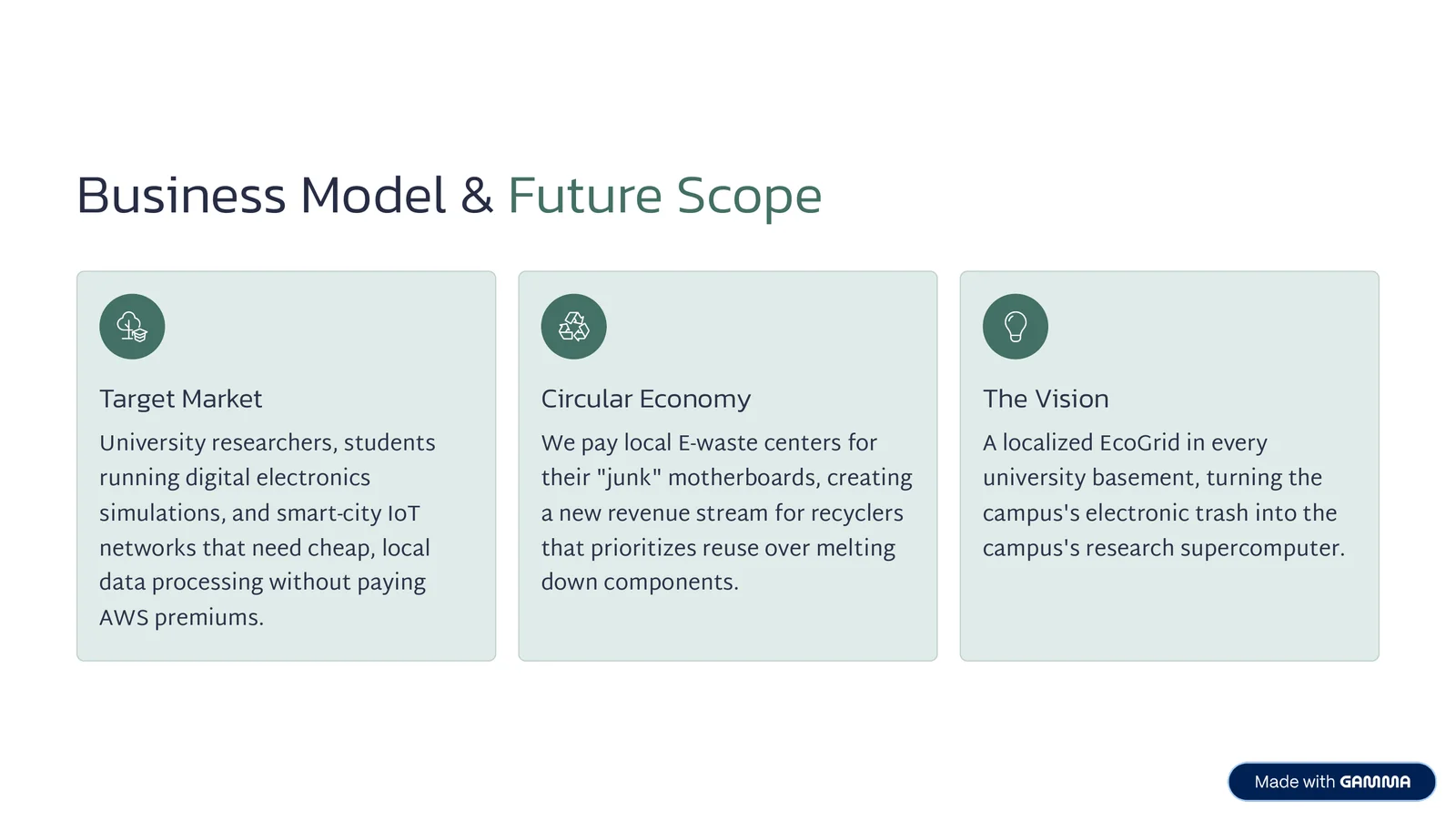
Functional boards bought from local e-waste shops, from phones and laptops thrown out over a dead battery or a cracked screen, networked into a local micro-cloud.
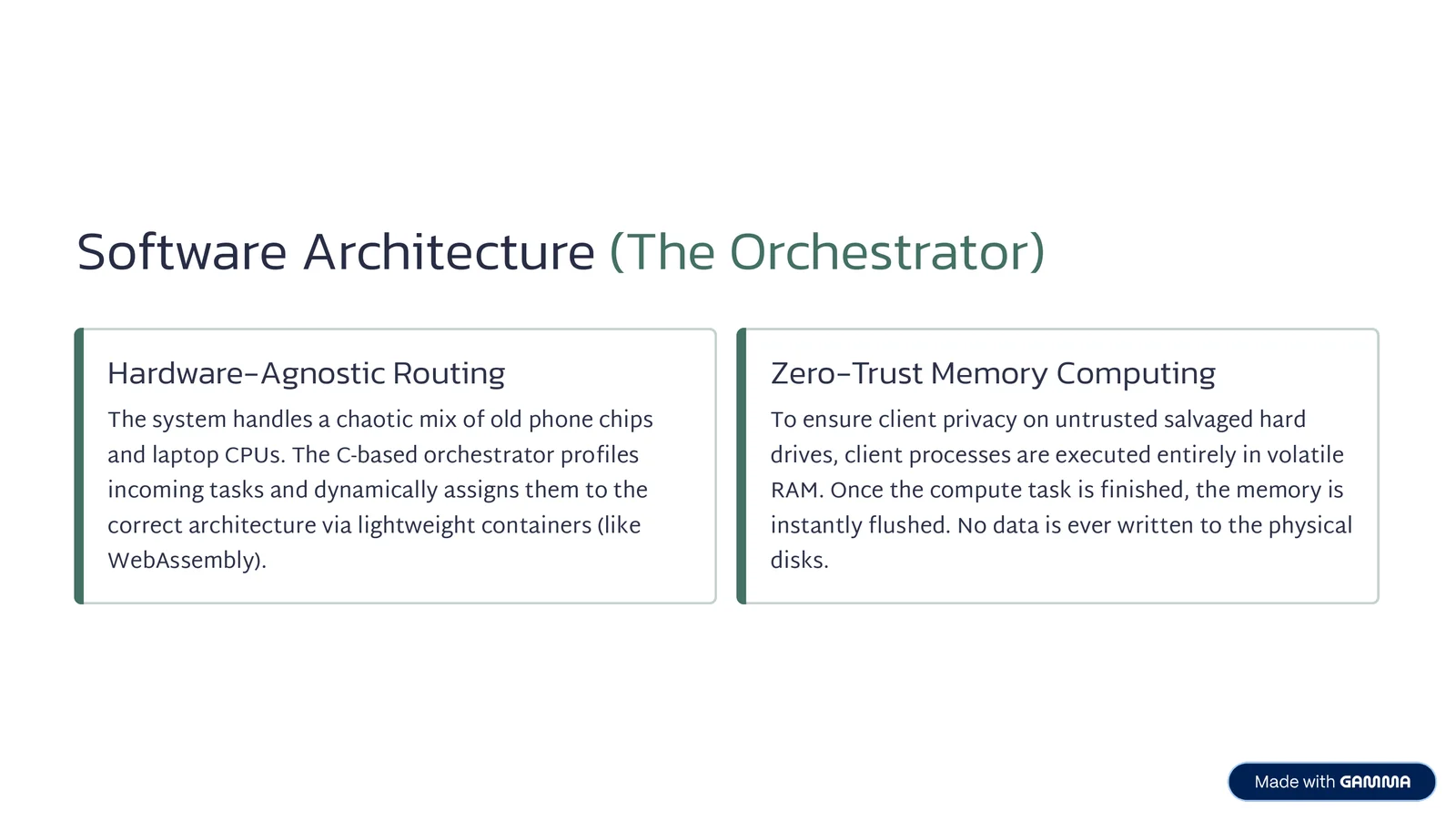
A bare-metal orchestrator
Instead of heavy operating systems, a tiny orchestrator written in C pools the CPU and RAM of a messy mix of ARM and x86 chips, routing each task through lightweight containers like WebAssembly.
Two-phase immersion cooling
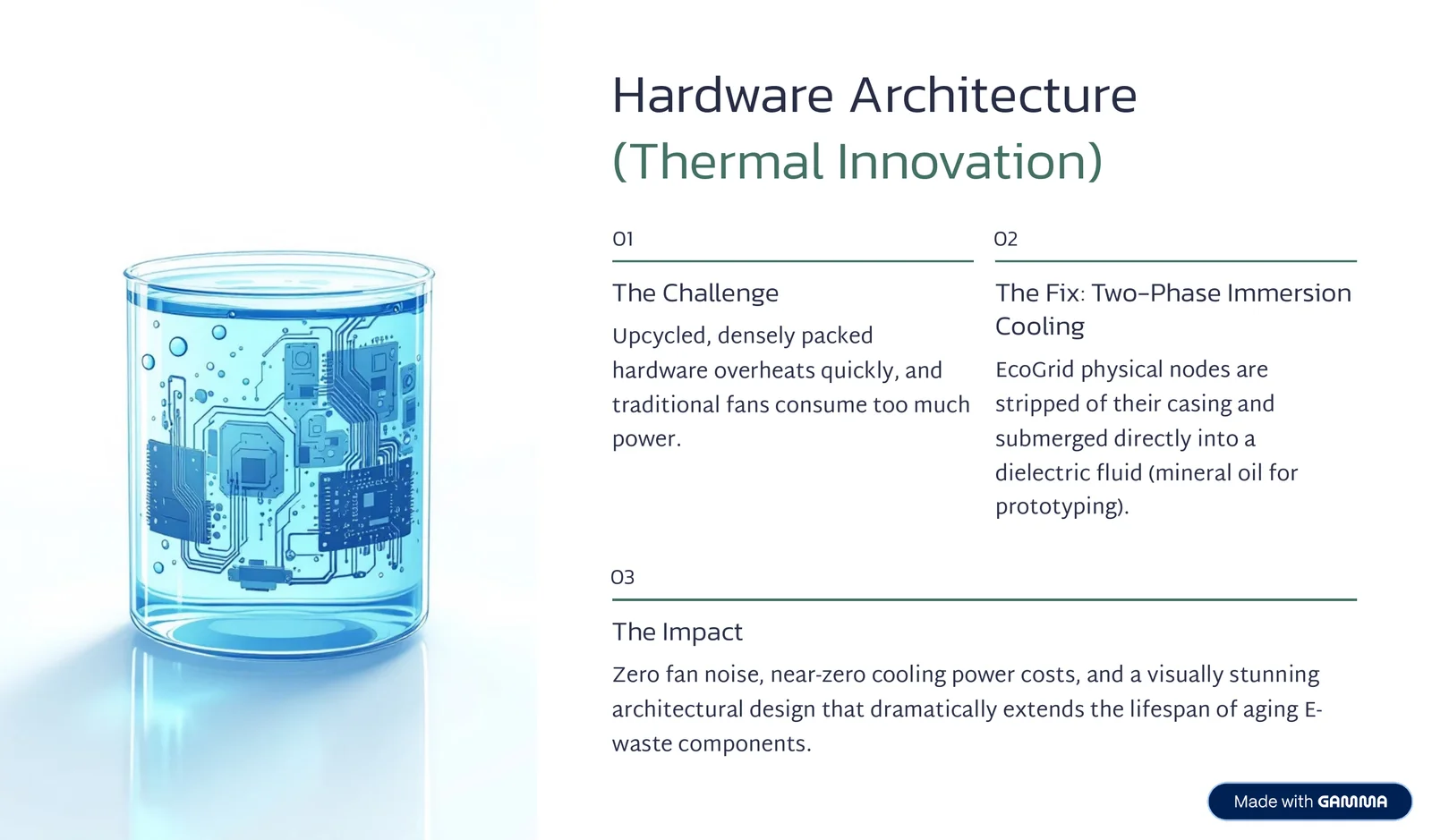
Nodes stripped of their casing and submerged in dielectric fluid (mineral oil for a prototype): zero fan noise and near-zero cooling power.
Zero-trust memory
Salvaged drives can't be trusted, so every client process runs only in RAM and is flushed the moment it finishes. Nothing touches the disk.
Built for Edge AI
Not for training giant Transformers. EcoGrid targets MIT's Closed-form Continuous-time (CfC) networks, light enough to run on old smartphone chips.
Triple redundancy
E-waste fails more often, so each task runs on three nodes at once. The first to finish wins and the others are killed. A dead board doesn't even register.
[04]From the floor
[05]The certificate
 Delivered ✓
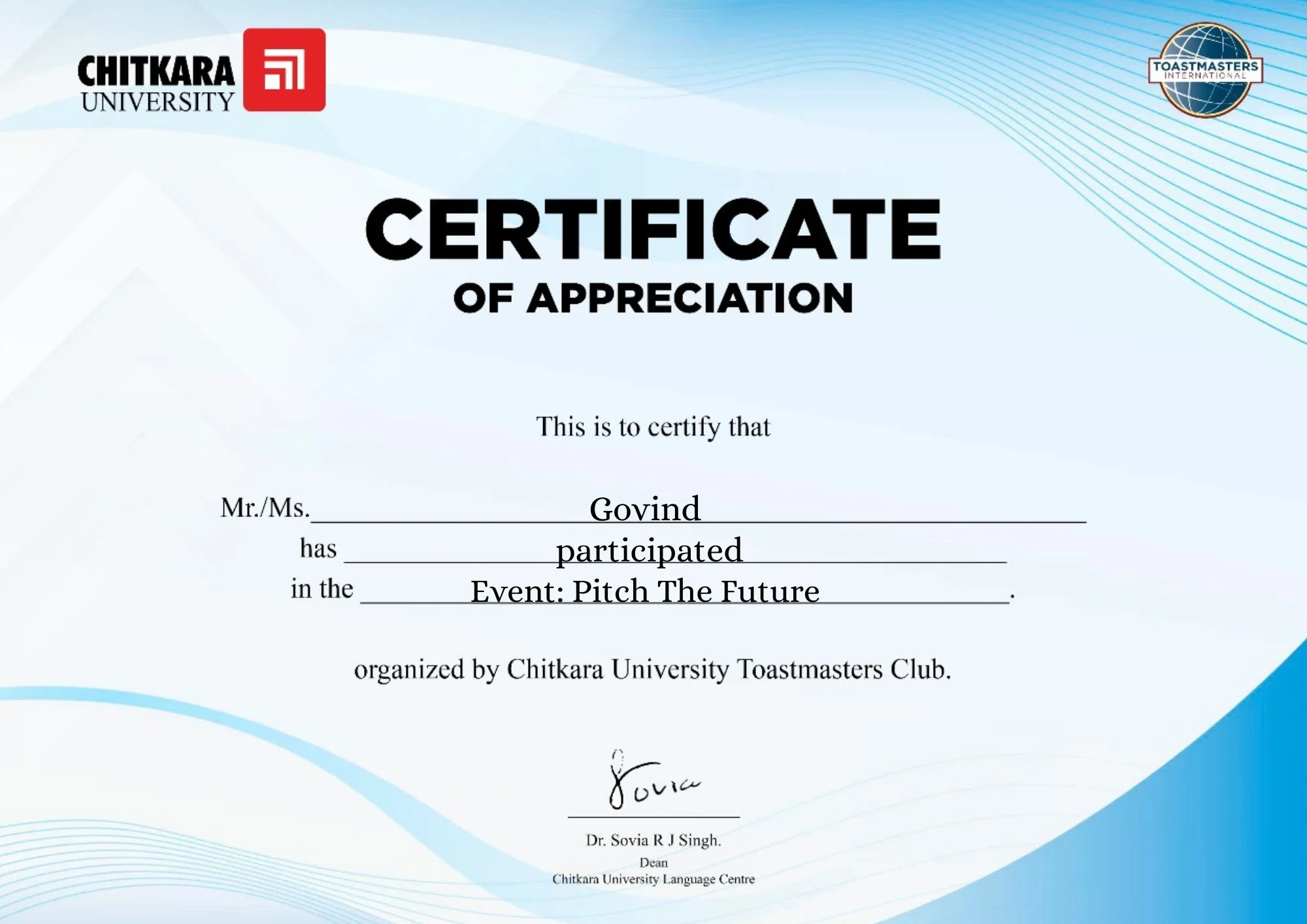
Certificate found. 📬
A certificate of appreciation for participating in Pitch The Future, organised by the Chitkara University Toastmasters Club. Signed by Dr. Sovia R J Singh, Dean, Chitkara University Language Centre. 📜
“Most of my competitions end with code. This one ended with a five-minute argument, and that turned out to be its own skill: the best idea in the room still has to convince the room.”
Next hackathon
HackSecure '26