In our first year we had DECA, Digital Electronics and Computer Architecture, and a lab to go with it. Part of that lab ran on a virtual lab from IIT Kharagpur: good simulations, but someone else’s, built around someone else’s syllabus.
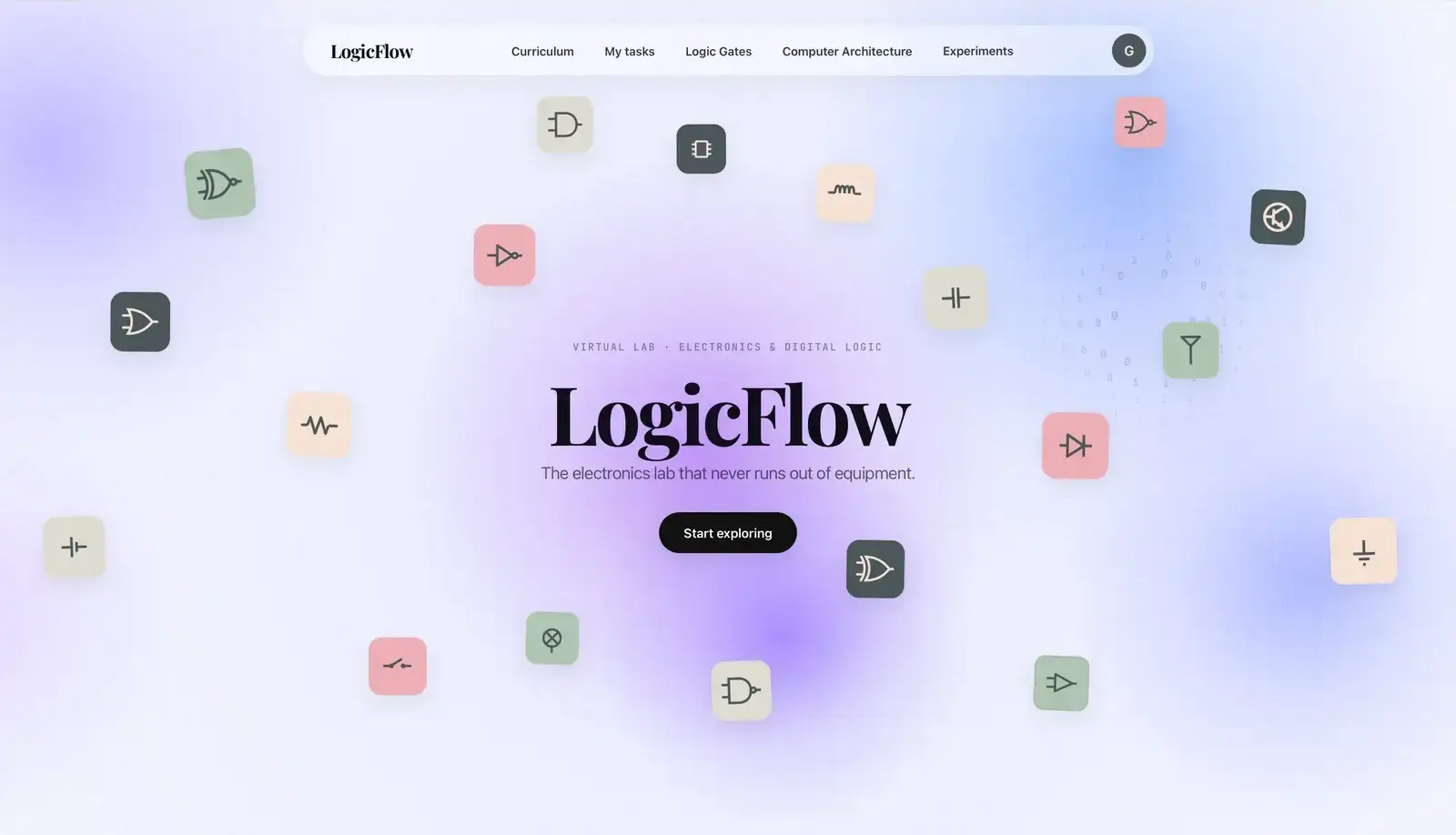
So in the second semester, when our frontend project came round for academic evaluation, we asked a simple question: what if our university had its own? LogicFlow is the answer — a virtual electronics lab where every experiment mirrors an entry from our own lab syllabus, and no one ever waits for a free oscilloscope.
Ten experiments, one lab
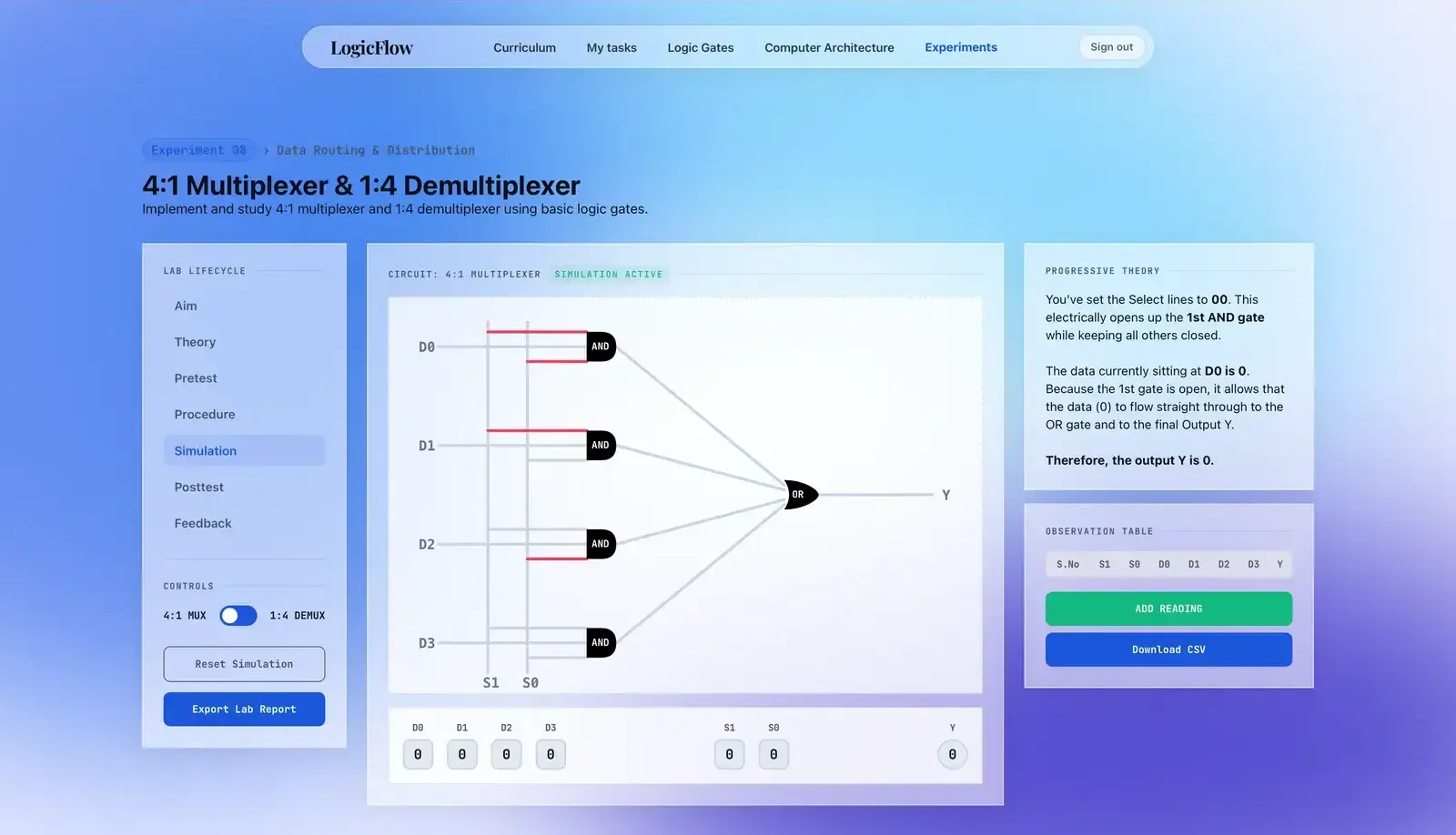
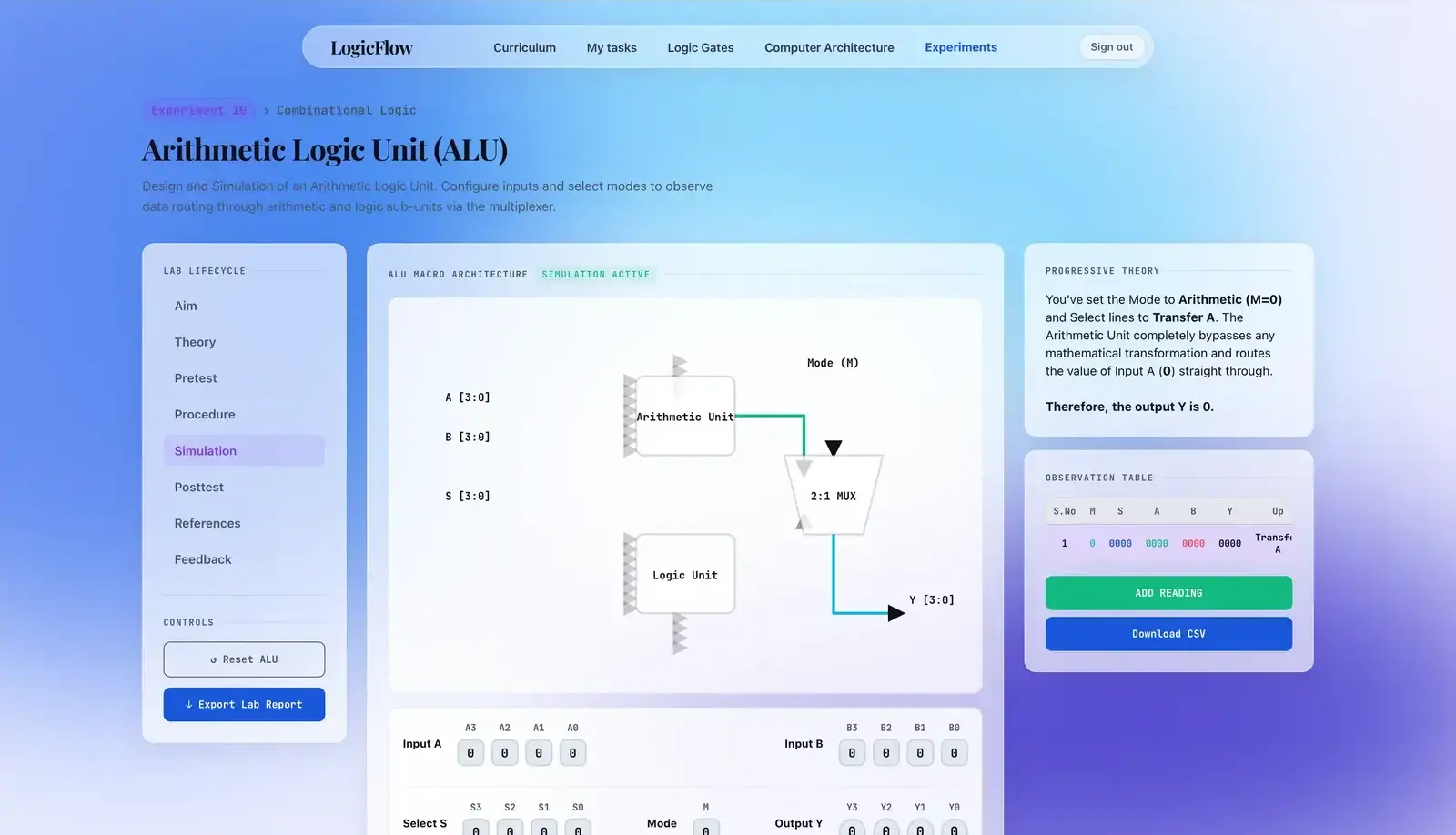
Each experiment follows the rhythm of a real lab session — aim, theory, pre-test, procedure, simulation, post-test — with live controls, waveforms and readings instead of a printed sheet.
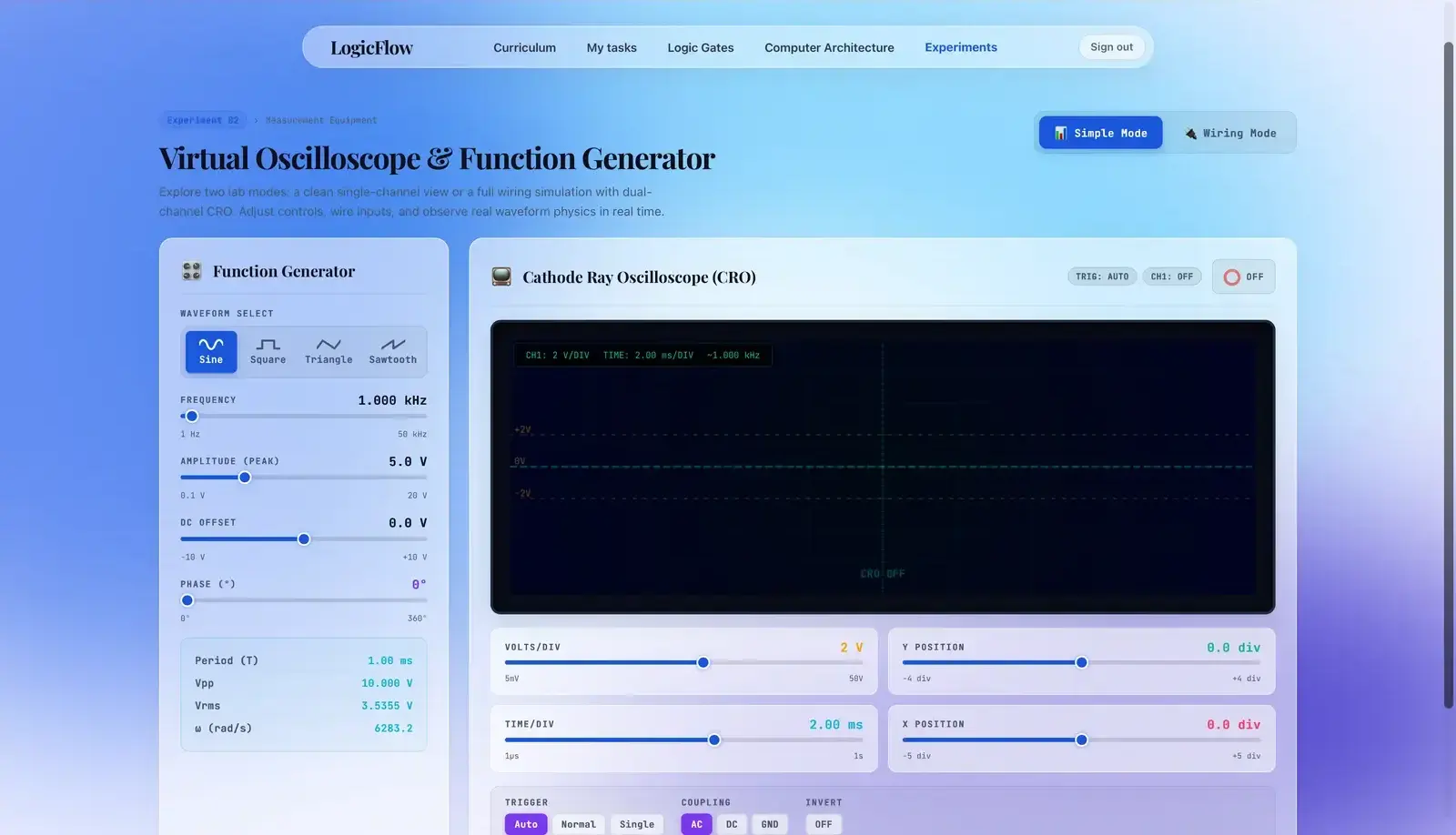
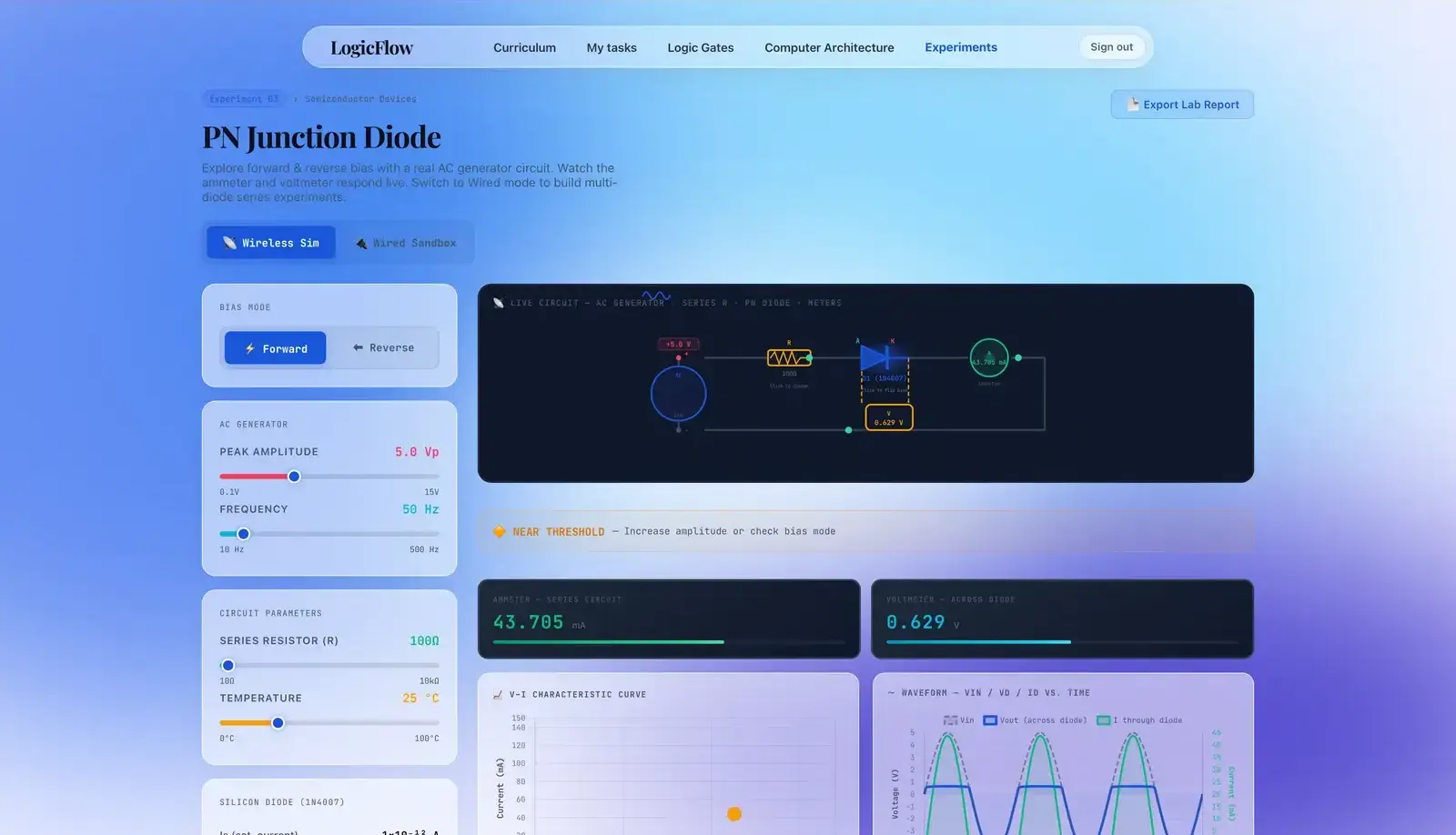
- Analog: electronic components with a live resistor colour-code calculator, a virtual oscilloscope and function generator, the PN junction diode, a Zener voltage regulator, and half-wave and bridge rectifiers with filters.
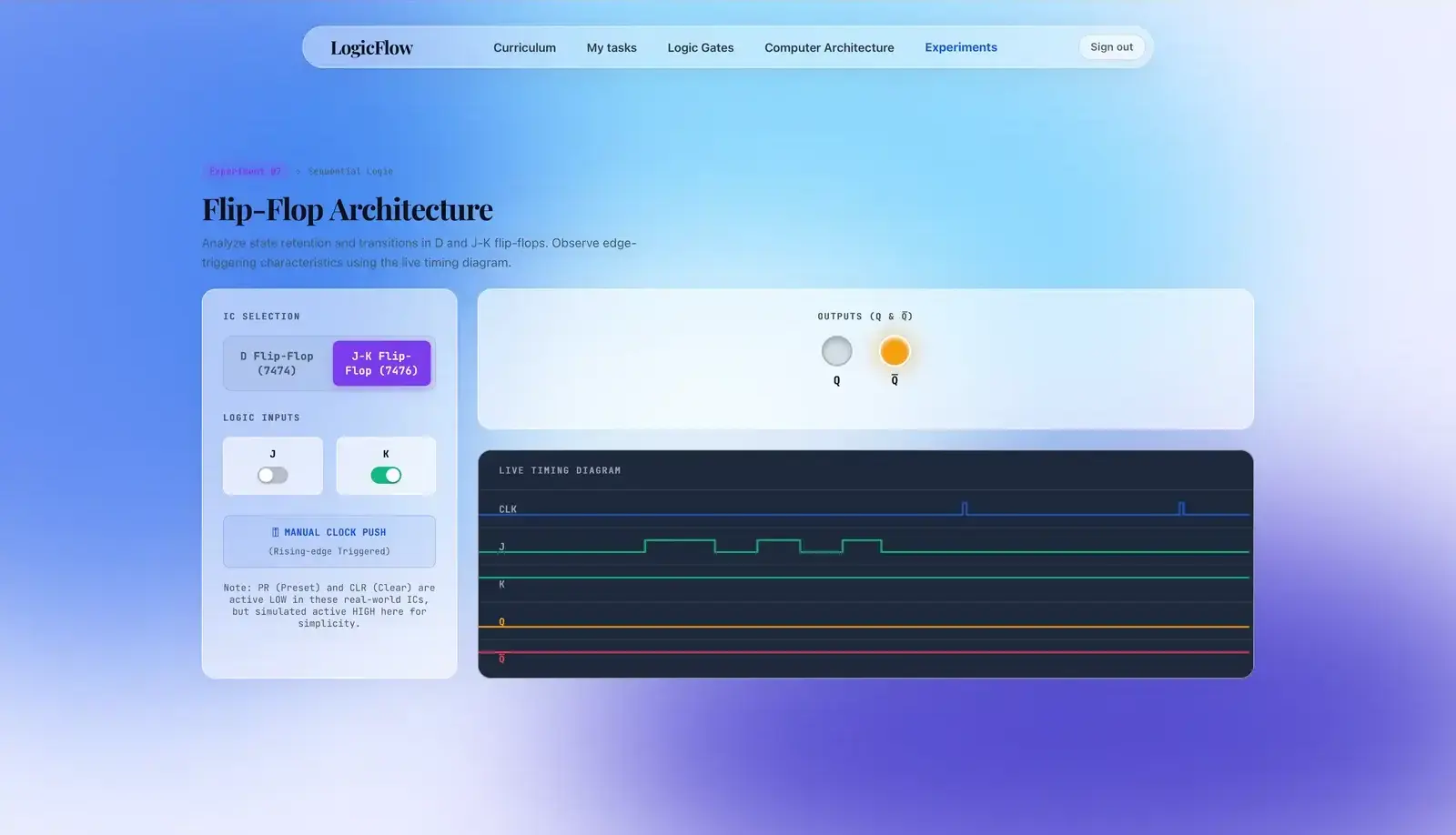
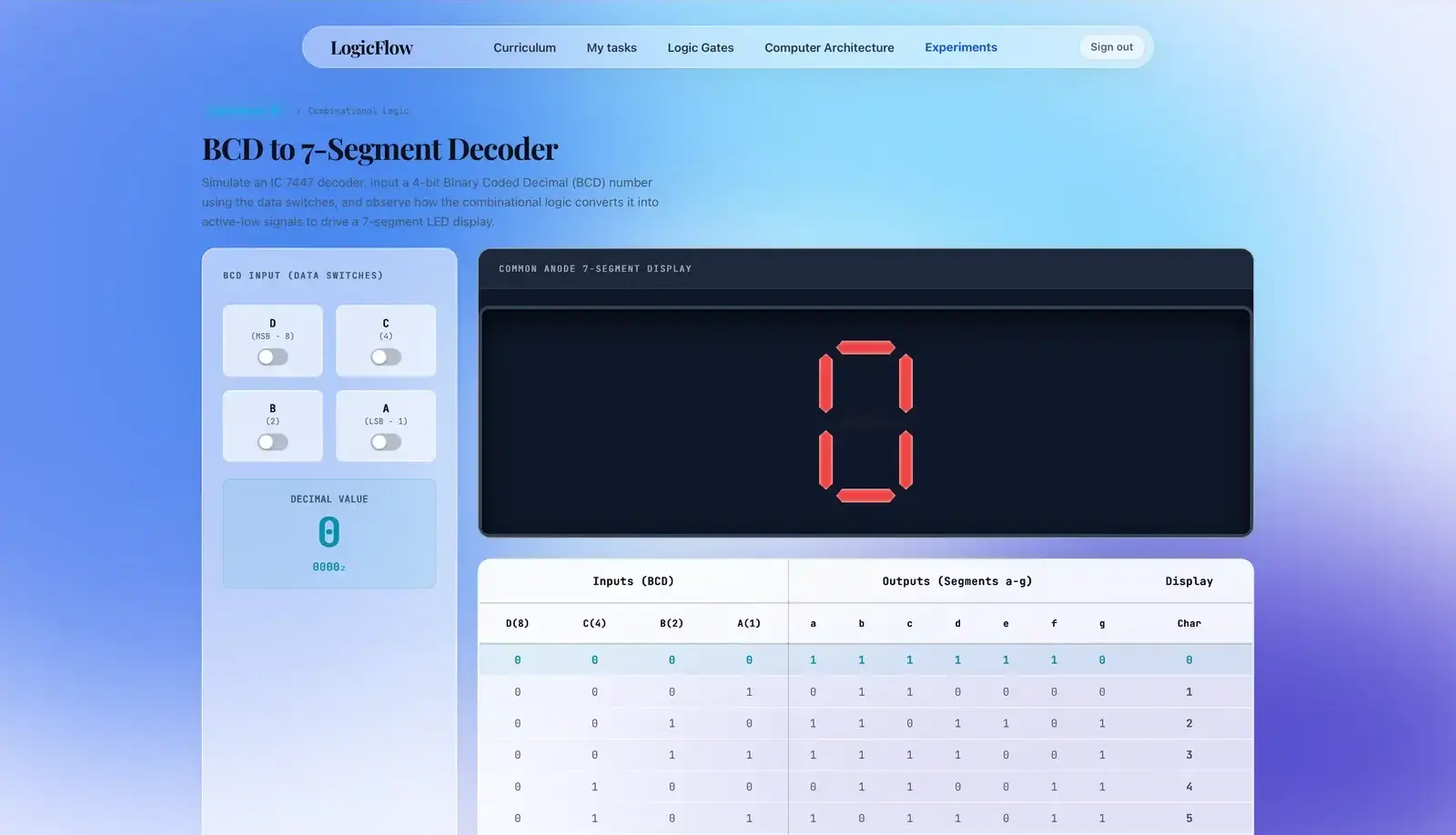
- Digital: D and J-K flip-flops, a BCD to 7-segment decoder, a multiplexer and demultiplexer, and a 4-bit ALU.
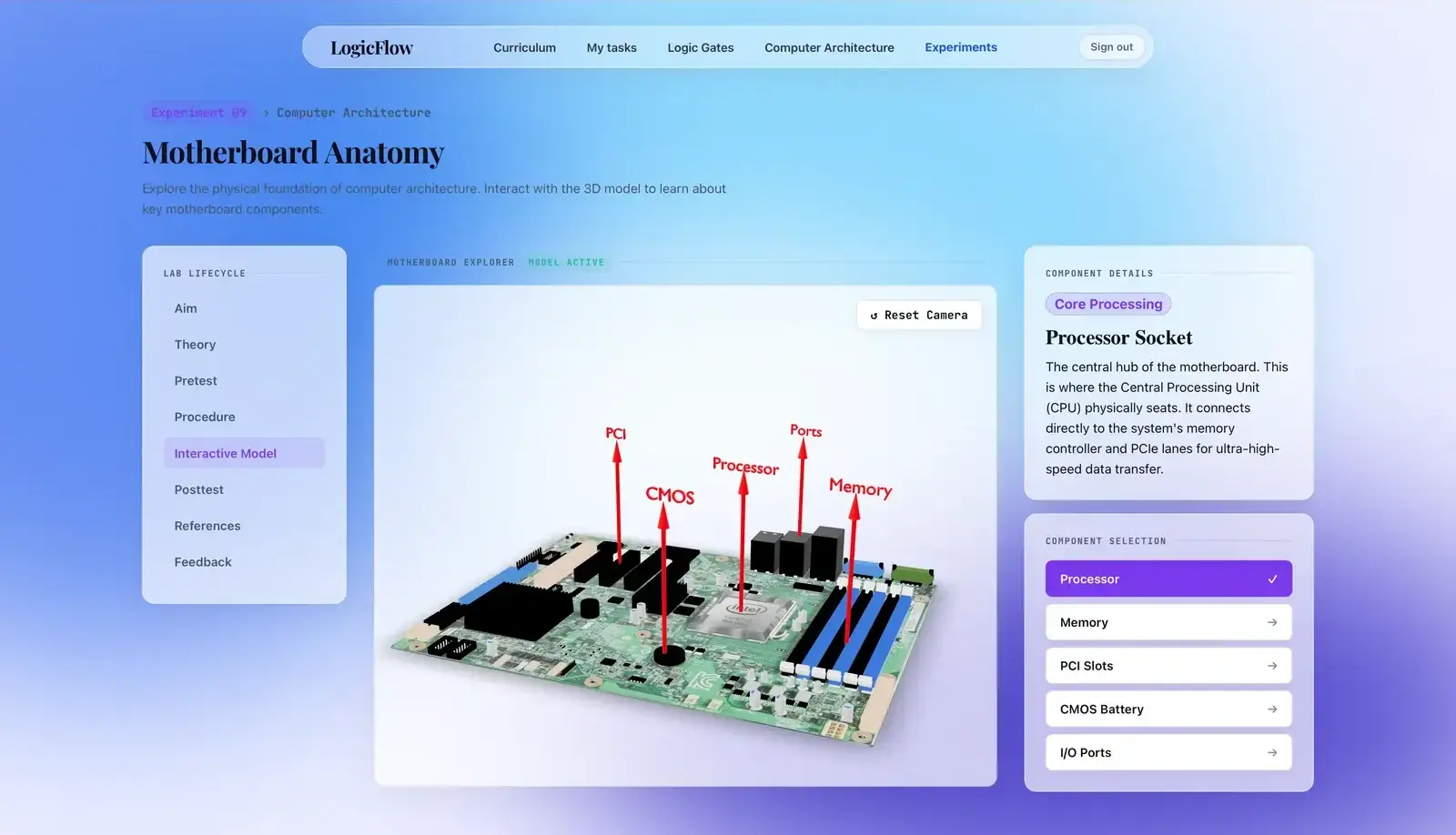
- Hardware: motherboard anatomy, explored on a 3D model.
The physics is done properly — the diode follows the Shockley equation, the rectifier computes its own DC level and ripple — and observation tables export to CSV.
Beyond the experiments
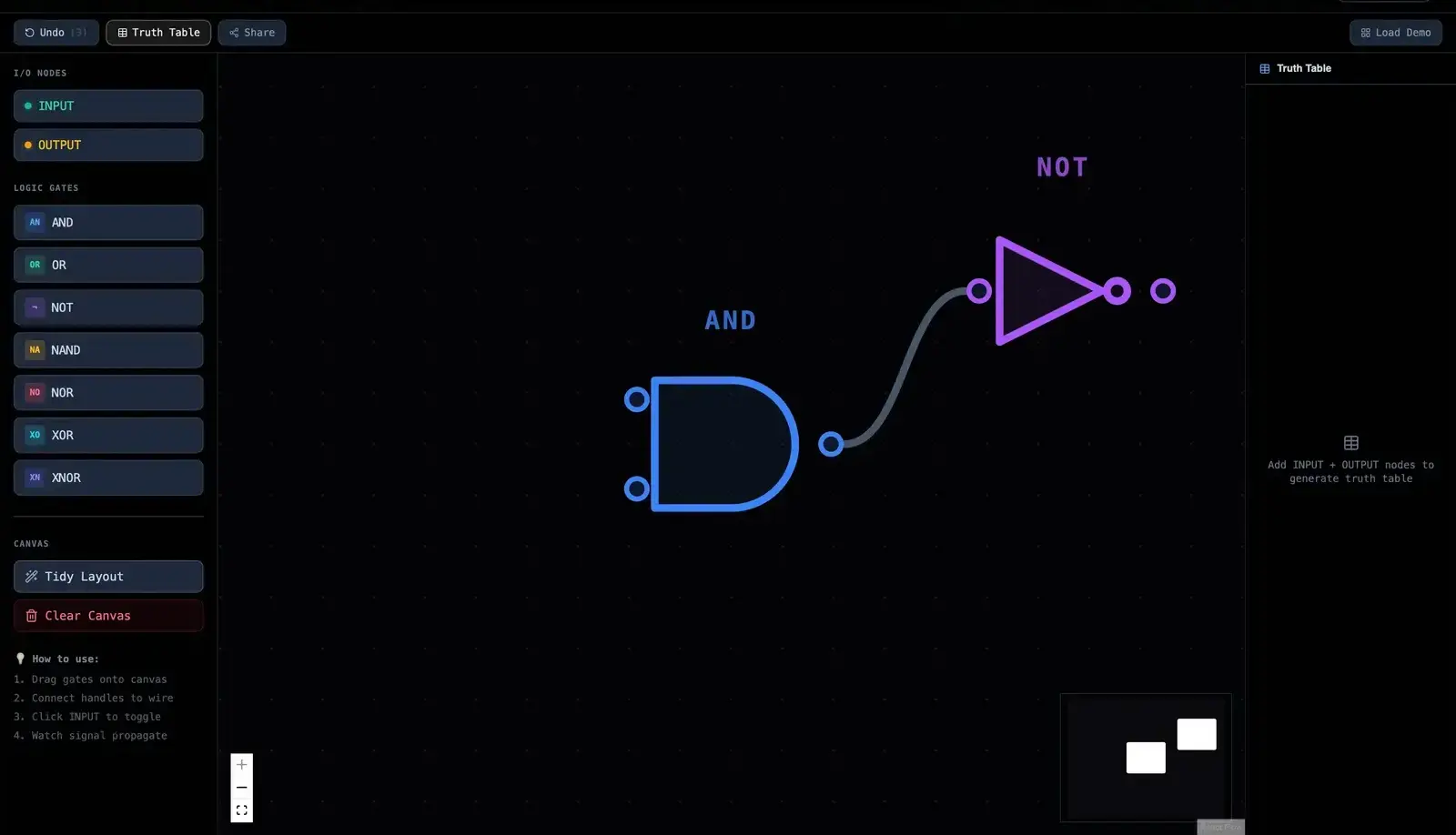
- A logic-gate sandbox. A drag-and-drop circuit builder: place gates, wire them, toggle inputs, watch the signal propagate and generate the truth table automatically. It runs as its own React app.
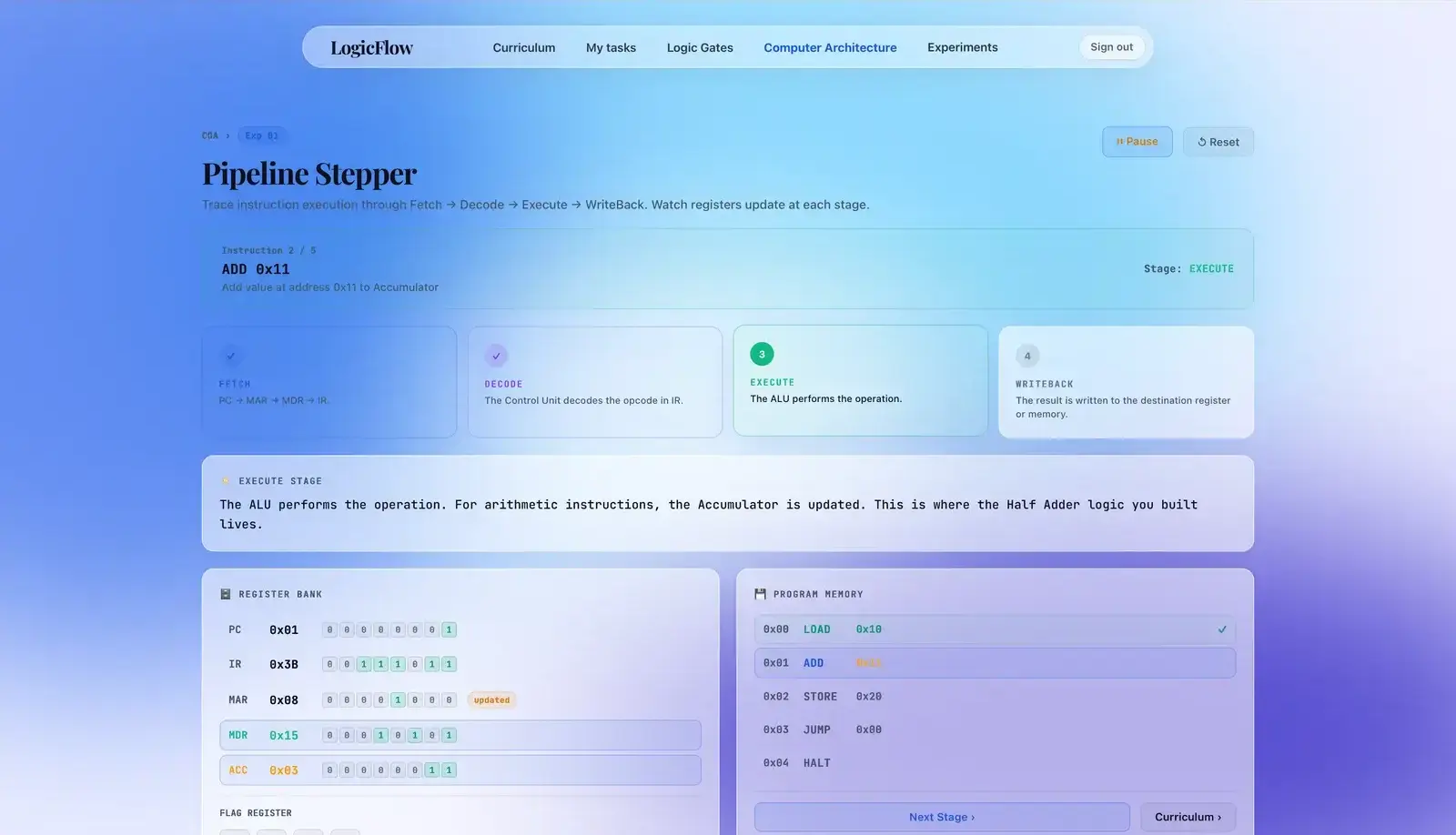
- A pipeline stepper. One instruction traced through fetch, decode, execute and write-back, with the registers, flags and program memory updating at every stage.
- A lab that runs like a lab. Faculty sign in to a panel to create batches, add students, assign experiments with deadlines and evaluate submissions. Students see their assigned tasks; guests get every experiment without the coursework.
How it’s built
The main lab is plain HTML, CSS and JavaScript with no build step: canvas for the instruments, Chart.js for the curves, and a shared glass-panel design system across every page. The sandbox is a separate React app. Accounts and tasks live in the browser for now, which keeps it a pure frontend project; real authentication and a gradebook are next on the roadmap.
Built for the classroom — and beyond.